Foundation Crack Repair by Epp Foundation Repair
Foundation Repair · Since 1994

Foundation Crack Repair Across Nebraska, Iowa, Kansas & Missouri.

Not every foundation crack is structural, but every foundation crack lets in water, and water doesn't stop on its own. Serving Nebraska, Iowa, Kansas, and Missouri since 1994, our crews repair vertical, horizontal, diagonal, and stair-step cracks in poured concrete, block, and stone foundations using methods chosen for the cause, not the convenience.

Nebraska · Iowa · Kansas · Missouri Since 1994

Let's take the first step toward a healthy home.

A local specialist will inspect your foundation, walk you through the findings, and send a clear estimate. no cost, no pressure.

Book instantly with Driive
BBB Accredited
Fully Insured
"By Your Side" Guarantee
Diagnosis First

Four Types of Foundation Cracks and What Causes Them

Based on over 30,000 foundation inspections across Nebraska, Iowa, Kansas, and Missouri since 1994, the overwhelming majority of foundation cracks fall into one of four categories. each with a distinct cause, structural risk, and repair path.

Foundation cracks fall into four categories based on cause and structural risk. Shrinkage cracks are cosmetic, caused by concrete curing, and rarely require structural repair. Settlement cracks are vertical and narrow, resulting from differential foundation movement, and require monitoring for progression. Lateral pressure cracks are horizontal cracks near the soil grade line caused by hydrostatic pressure and soil load. these indicate active structural stress and require reinforcement. Stair-step cracks follow mortar joints in block or brick veneer and result from differential settlement beneath the wall; underpinning is typically required.

  • Shrinkage Cracks. Hairline, vertical, in poured concrete
  • Settlement Cracks. Vertical or diagonal, varying width
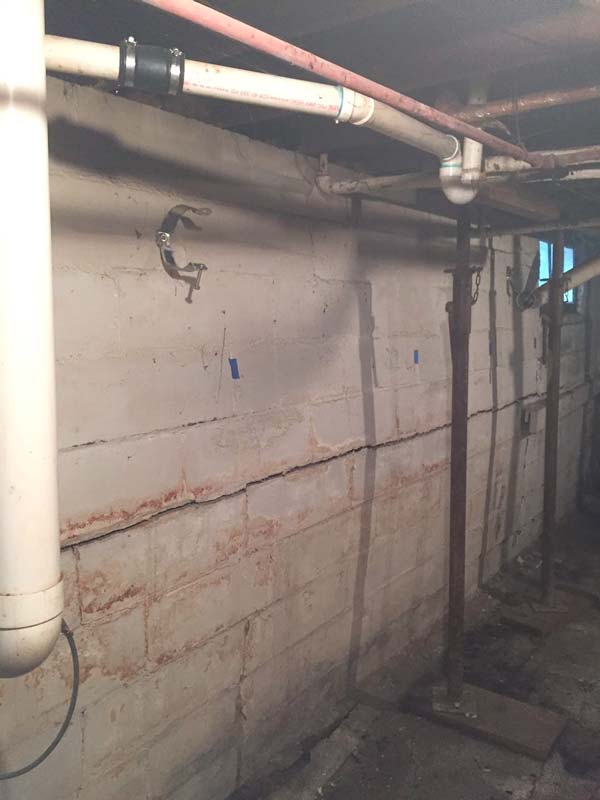
  • Lateral Pressure Cracks. Horizontal, near soil grade line
  • Stair-Step Cracks. Along mortar joints in block or brick veneer
Cosmetic
Shrinkage Cracks
Caused by normal concrete curing and drying, shrinkage cracks are hairline vertical fractures in poured concrete walls. They carry no structural risk and do not indicate foundation movement of any kind. The only consequence of leaving them open is moisture intrusion. Sealing with polyurethane caulk is the only intervention warranted. We assess and decline the majority of shrinkage crack calls because they don't need professional repair.
Monitor
Settlement Cracks
Caused by differential foundation movement. One section of the foundation compressing or shifting more than adjacent sections. Severity depends on width, rate of change, and whether wall displacement accompanies the crack. A crack stable at 1/8″ for two years is a different problem than one that opened 3/16″ over a single frost cycle. Movement monitoring before recommending repair is our standard practice.
Structural
Lateral Pressure Cracks
The most structurally urgent crack type. Horizontal cracks at or near the soil grade line result from hydrostatic pressure and lateral soil load exceeding the wall's capacity. The soil is actively pushing the wall inward. A wall in active inward deflection can fail suddenly. Carbon fiber strapping, wall anchors, or I-beam bracing are standard reinforcement methods depending on deflection level and soil conditions.
Structural
Stair-Step Cracks
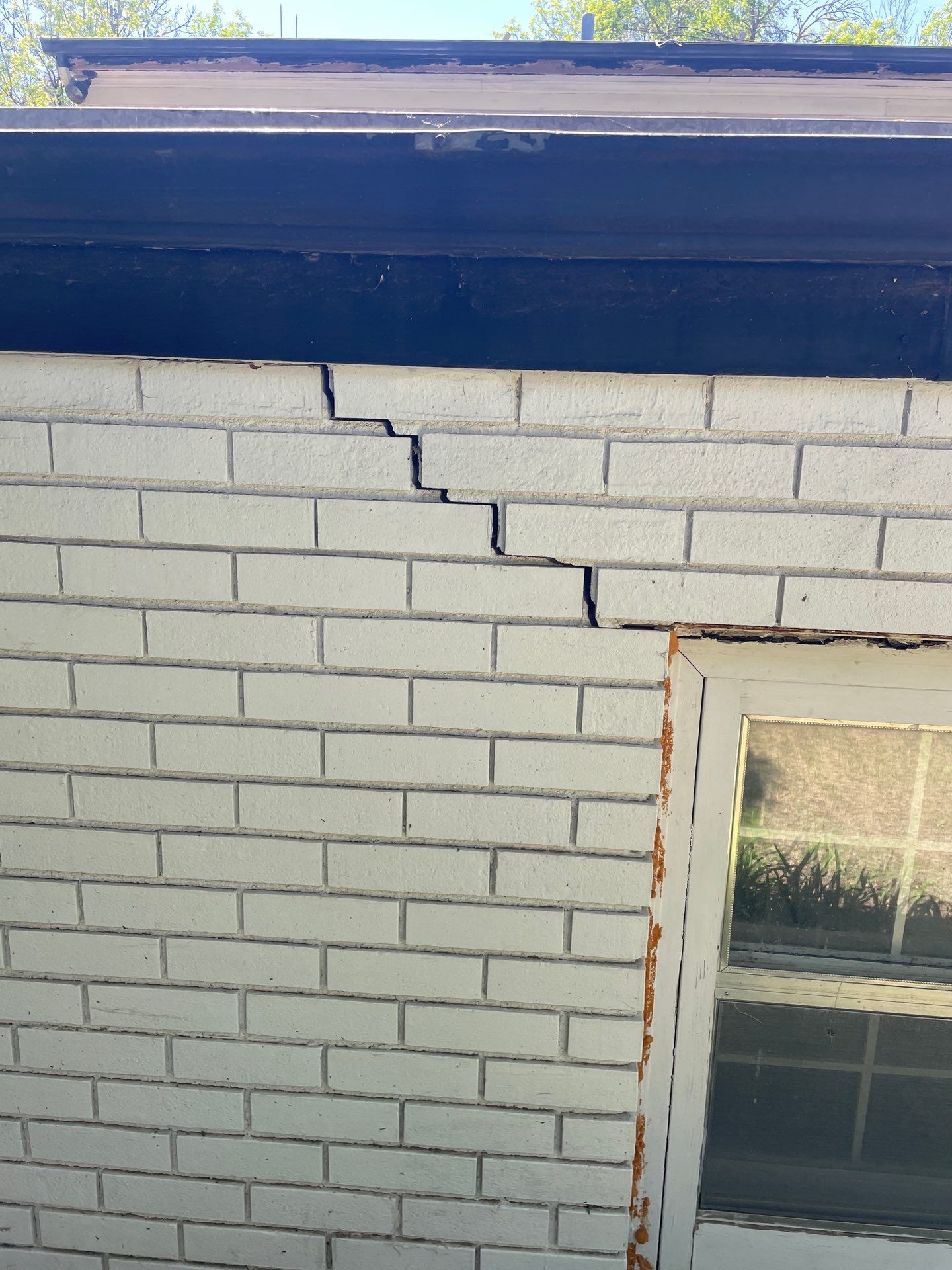
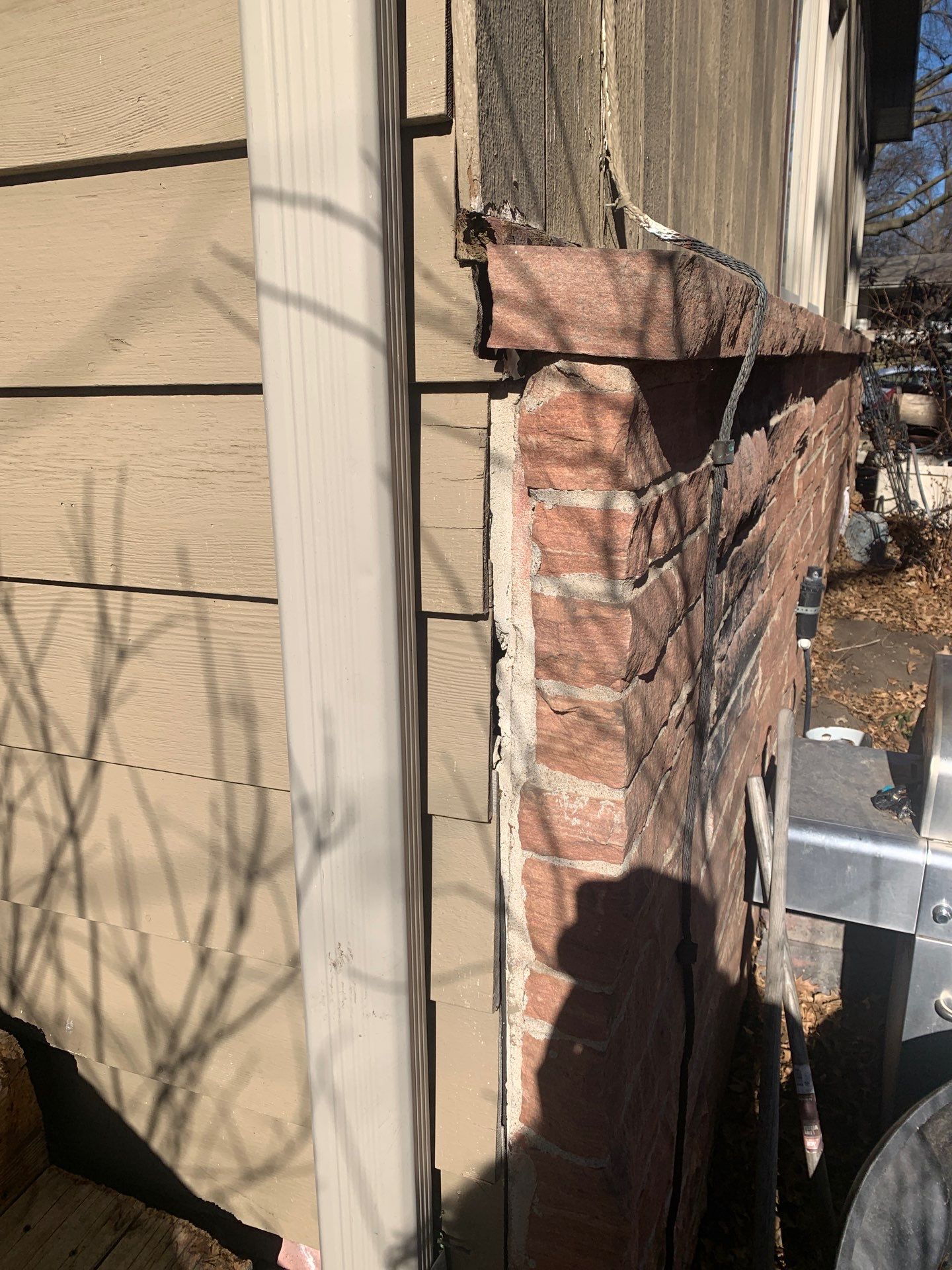
Stair-step cracks follow mortar joints through concrete block or brick veneer, indicating differential settlement beneath the affected wall section. The soil under one portion is compressing or eroding at a different rate than adjacent sections. a pattern common in eastern Nebraska loess after extended dry periods. Helical piers or push piers to load-bearing depth are the standard fix, stabilizing the settling zone before the crack pattern widens.
Which Solution is Right?

Three crack-repair methods, three different jobs.

Choosing the right solution depends on the crack's behavior, not just its appearance. Compare the methods we use most often in Midwest homes.

Most common
Epoxy Injection
For wet cracks
Polyurethane Foam Injection
For bowing walls
Carbon Fiber Strapping
Best for Stable, dry structural cracksWet, leaking, or actively moving cracksHorizontal cracks with inward deflection
Crack types Settlement cracks; healed lateral pressure cracksLeaking shrinkage cracks; low-risk active cracksLateral pressure cracks; bowing walls under 2″ deflection
What it does Bonds crack faces together. Restores the wall to near-original concrete strength. the two faces become structurally monolithic after cure.Expands to fill the crack and seals against water. Flexible enough to accommodate minor seasonal movement without re-cracking.High-tensile carbon fiber straps lock the wall against further inward movement. Stabilizes the wall in position. does not correct existing deflection.
Works when crack is… Crack is stable (not actively moving) and dryCrack is wet, leaking, or in an environment with seasonal movementWall deflection is under 2″ and crack indicates active lateral pressure
Lifespan 25+ years10, 15 yearsPermanent
Warranty 25-year product warranty10-year product warrantyLifetime product warranty
Regional Context

Why foundation movement in Nebraska and Iowa needs a regional diagnosis

Loess soils across eastern Nebraska and western Iowa lose strength when wet. Expansive clay across northeast Kansas and northwest Missouri swells and shrinks with the seasons. Foundation movement here behaves differently than in states with stable bearing soil, which is why our diagnosis starts with the soil under the home, not just the crack on the wall.

36 to 42"
Frost penetration depth
Eastern Nebraska average
60 to 80
Freeze-thaw cycles / year
Lincoln to Omaha corridor
35 to 40"
Annual precipitation
NE / IA service region
30+
Years of regional inspections
30,000+ homes assessed

Loess soils and the crack patterns they produce

Most of eastern Nebraska and western Iowa sits on wind-deposited loess. a fine, silty soil 10 to 200+ feet deep. Loess holds its structure when dry but loses cohesion rapidly when saturated. After a wet spring, saturated loess expands against foundation walls. After a dry Nebraska summer, it contracts. pulling away from footings, creating voids beneath slabs, and producing the vertical and diagonal settlement cracks we see most frequently on the Lincoln, Omaha, Council Bluffs corridor.

The Marshall and Sharpsburg loess series. dominant across the eastern Nebraska service area. are particularly prone to this cyclical volume change. Homes built in the 1960s, 1980s on uncompacted loess backfill show the highest incidence of progressive settlement cracking in our inspection data.

Frost depth, freeze-thaw cycles, and horizontal cracking

Eastern Nebraska's 36, 42" frost penetration depth means the soil below grade freezes and thaws 60, 80 times per year. Each cycle applies lateral pressure to basement walls. A wall that holds through ten cycles can fail in the eleventh if drainage has worsened, backfill has settled, or the wall was already at capacity. Horizontal cracks near the soil grade line are almost always a freeze-thaw story in this region.

In eastern Kansas, expansive clay pockets near the surface introduce a different failure mode . consistent volume change regardless of frost depth. Horizontal cracking in Kansas foundations typically traces to clay expansion; the same pattern in Nebraska more often indicates frost-driven hydrostatic pressure.

Problem Signs

What Is Your Home Trying to Tell You?

Foundation, water, and structural issues rarely fix themselves. they progress. Recognizing the early signs protects your home and keeps repair costs manageable. The signs below are the most common indicators we see in Midwest homes.

Spotting one of these in your home?

Our specialists evaluate the underlying cause before recommending any work. Inspections are at no cost and there's no obligation to proceed.

"On a typical month in Omaha I'll diagnose 20 cracks in block walls, and about 14 of them are the same horizontal crack at the grade line from clay pressure. Customers think injection will fix it. It won't. That wall needs carbon fiber straps or wall anchors first, then sealing. Epoxy alone in a block crack under active pressure is throwing money away."
Dave Epp
Dave Epp
On diagnosing horizontal block-wall cracks in Omaha and across eastern Nebraska
Project Photos

Foundation Crack Repair. Before, During & After

Real jobs completed across Nebraska, Iowa, Kansas, and Missouri. Photos sourced directly from our job sites.

During
Work in progress. , Nebraska
Work in progress. Bellevue, NE
Bellevue, NE
Work in progress. Bellevue, NE
Bellevue, NE
Why Choose Epp

Care and expertise from a team that's been doing this since 1994.

Epp Foundation Repair is locally owned and operated, with crews dedicated exclusively to foundation, basement, and concrete work across the Midwest.

Specialized expertise.

Foundation repair, waterproofing, and concrete leveling are our entire focus. not a sideline.

Locally owned since 1994.

Three decades of experience with Midwest soils, basements, and weather conditions.

BBB Integrity Award winner.

Recognized in 2011 and 2016 for ethical business practices and customer transparency.

Warrantied solutions.

Most product solutions carry 10 to 25-year warranties backed by the original installer.

EPP · SINCE 1994

Why hire Epp Foundation Repair.

MEET THE TEAM · 2 MIN
Frequently Asked Questions

Answers to common questions about Foundation Crack Repair.

Don't see your question here? Our team is happy to help. Reach out anytime.

No. Hairline shrinkage cracks in poured concrete walls (typically vertical and narrower than a credit card) are cosmetic and a normal result of concrete curing. Cracks become structural when they're horizontal, stair-step through block, wider than a dime, actively growing, or leaking water.

Pricing ranges above are general estimates only and are not project quotes. A precise figure is provided on each written estimate after on-site inspection.
Pricing & Scope

Honest pricing & honest limits

Every home is different. The figures below are typical ranges for similar work across Nebraska, Iowa, Kansas, and Missouri. They are NOT a guaranteed quote. A free on-site inspection is required for a written estimate that reflects your specific scope, access, and conditions.

Estimate Only

Approximate pricing

$400 to $800 per crack injection (residential poured concrete). Carbon fiber straps $300 to $500 per strap (3-6 typical). Full perimeter waterproofing $6,000 to $10,000 when crack repair is part of a larger water problem. Written estimate after on-site inspection reflects your specific scope.

When this isn't the right fix

Crack injection is the wrong scope when the wall is under active lateral pressure (horizontal cracks in block walls need carbon fiber or wall anchors first), when stair-step cracks indicate underlying differential settlement (push or helical piers come first), or when the crack is so wide and the wall so deteriorated that section replacement is more honest than injection. Epp will tell you on inspection when injection is not enough.

Why our estimates are honest

BBB A+ rated since 2004 · BBB Integrity Award winner 2011, 2016

More Foundation Repair Services

The full range of our foundation repair work.

Every foundation repair method we install. Sequenced so the soil profile and failure mode determine the fix.

Retaining Wall Repair

A leaning or bulging retaining wall is a soil problem before it is a wall problem. Epp Foundation Repair diagnoses the failure mode first, then prescribes the right fix: helical tieback anchors, drainage correction, or full wall replacement.

Learn more

Slab Jacking

A settled slab foundation does not always mean piers. Sometimes the right answer is polyurethane foam, sometimes it is slab piers, and sometimes the slab needs to be replaced. Epp Foundation Repair diagnoses the depth and cause of the void first, then chooses the lift method.

Learn more

Soil Stabilization

When the soil under your foundation is the problem, repairing the structure alone fails within two or three wet-dry cycles. Epp Foundation Repair treats the cause. Collapsing loess, expansive clay, washed-out voids, using polyurethane chemical injection, soil grouting, and deep-driven helical anchors, matched to the soil under your specific lot.

Learn more

Commercial & Industrial Foundation Repair

Foundation repair for warehouses, industrial slabs, strip malls, and multi-tenant residential. Engineered to commercial load classes, scheduled around your operations, executed alongside your structural engineer. Dave Epp personally inspects every commercial bid before the crew is dispatched.

Learn more

Slab Foundation Repair

Epp Foundation Repair stabilizes failing slab-on-grade foundations across Nebraska, Iowa, Kansas, and Missouri using slab piers, polyurethane lift, and void-fill foam. Most settled slabs trace back to shallow original footings, expansive clay heave, or undetected plumbing voids. Epp diagnoses the cause before quoting a repair.

Learn more

Basement Foundation Repair

Epp Foundation Repair stabilizes poured concrete, CMU block, and stone basement walls across Nebraska, Iowa, Kansas, and Missouri. Each wall type fails differently. Epp diagnoses the failure pattern before specifying carbon fiber, wall anchors, push piers, or perimeter waterproofing.

Learn more

Post & Pier Foundation Repair

Epp Foundation Repair inspects, supplements, and replaces failing pier systems across Nebraska, Iowa, Kansas, and Missouri. Including 1970s-era helical piers installed before torque verification, rotted wooden crawl-space posts, and undersized push piers from prior contractors. Every existing pier gets a load test before Epp recommends replacement.

Learn more

New Construction Foundation Consultation

Epp Foundation Repair consults with builders and homeowners on new builds across Nebraska, Iowa, Kansas, and Missouri. Pre-construction soil assessment, engineered helical pier installs on questionable sites, and pre-occupancy retrofit waterproofing. Epp does not pour foundations or install waterproofing during construction. The honest scope is here.

Learn more

Foundation Leveling

Foundation leveling lifts a settled house back toward original elevation using helical piers, push piers, or polyurethane foam. When ground conditions allow safe lift without cracking interior finishes.

Learn more

Foundation Inspection

On-site foundation inspection with laser-level floor survey, crack monitor installation, and 30-to-90-day re-measure protocol that separates structural movement from cosmetic settling before any repair recommendation.

Learn more
Service Areas

Serving Nebraska, Iowa, Kansas & Missouri.

Local crews based in six regional offices, dispatched daily across four states. If your town isn't listed, call us. we likely serve your area.

Top cities we serve
Check Your Service Area
The Process

How we approach Foundation Crack Repair

A straightforward path from initial inspection to completed repairs.

Step 01

On-site crack diagnosis and width measurement

An Epp structural diagnostician arrives on site and inspects every visible crack with a scale reference and a feeler gauge. The inspector classifies each crack by pattern (vertical, horizontal, stair-step, or diagonal), measures width to 1/64 inch, identifies substrate (poured concrete, CMU block, or stone), and checks for water staining or active seepage.

Step 02

Crack monitor installation when movement status is unclear

On any crack that is not clearly cosmetic, Epp installs a calibrated crack monitor across the crack and records the baseline reading. The monitor stays in place 30 to 90 days. The inspector returns and re-measures. Roughly 1 in 3 monitored cracks turn out stable and need no structural reinforcement. Only sealing.

Step 03

Written scope with method matched to cause

Epp produces a written scope identifying repair method per crack: epoxy injection (structural, stable, dry), polyurethane foam (water repair, leaking), carbon fiber strap (block wall under lateral pressure), or sequential polyurethane-then-epoxy (water-active structural cracks). Cracks downstream of settlement or heave are flagged separately with a recommended underpinning or anchor scope. Fixed-price estimate per crack and per linear foot.

Customer Reviews

Over 1,750 homeowners have shared their experience.

A 4.9-star average across Google, with verified reviews from homeowners throughout Nebraska, Iowa, Kansas, and Missouri.

Free Estimate

Two ways to start: book instantly, or request an estimate.

Schedule your inspection in seconds with our Driive booking tool, or share a few details and a local specialist will follow up within one business day.

What to expect
  • A local foundation specialist on site
  • A complete walk-through of the findings
  • A written estimate within one business day
  • No cost, no obligation, no high-pressure sales
Prefer to call
402-423-9192
Nebraska · Iowa · Kansas · MissouriSince 1994
Epp Foundation Repair

Let's take the first step toward a healthy home.

A local specialist will inspect your foundation, walk you through the findings, and send a clear estimate. no cost, no pressure.

Book instantly with Driive
BBB Accredited
Fully Insured
"By Your Side" Guarantee
Our Locations

Six regional offices across the Midwest.

See all service areas
Lincoln, NE
Epp Foundation Repair
1133 Libra Dr
Lincoln, NE 68512
402-566-5265
Omaha, NE
Epp Foundation Repair
12305 Gold St, Ste 2
Omaha, NE 68144
402-521-5081
Grand Island, NE
Epp Foundation Repair
802 Bronze Rd
Grand Island, NE 68803
308-303-3944
Norfolk, NE
Epp Foundation Repair
1105 S 13th St, Ste 205
Norfolk, NE 68701
402-792-4092
Clive, IA
Epp Foundation Repair
2175 NW 86th St #14c
Clive, IA 50325
515-349-5562
St. Joseph, MO
Epp Foundation Repair
2400 Frederick Ave, Suite 315
St. Joseph, MO 64506
816-549-2672