Basement Waterproofing · Problem Signs · Since 1994

Stop The Source. Then The Flooding Stops With It

Epp Foundation Repair has diagnosed recurring basement flooding across Nebraska, Iowa, Kansas, and Missouri since 1994. BBB A+. BBB Integrity Award 2011 and 2016.

Nebraska · Iowa · Kansas · Missouri Since 1994

Let's take the first step toward a healthy home.

A local specialist will inspect your foundation, walk you through the findings, and send a clear estimate. no cost, no pressure.

Book instantly with Driive
BBB Accredited
Fully Insured
"By Your Side" Guarantee
What this symptom means

Basement Flooding: diagnosed and explained.

Epp Foundation Repair has responded to more than 9,000 basement flooding calls across the Lincoln, Omaha, Sarpy County, Pottawattamie County, Norfolk, Grand Island, and St. Joseph corridors since 1994. Active water on a basement floor is almost never a single-cause event. Dave Epp finds two or three contributing failures stacked on top of each other in roughly 4 out of 5 inspections. The hydrostatic load from a saturated yard combines with a 14-year-old sump pump that lost 40 percent of its capacity, a downspout dumping 8 feet from the wall, and an unsealed cove joint at the wall-floor seam. Treating one without the others gets the homeowner a dry month, then another flood. Epp diagnoses the full chain, fixes the foundation scope, and tells the homeowner plainly which work belongs to a plumber, a water restoration crew, or a mold remediator.
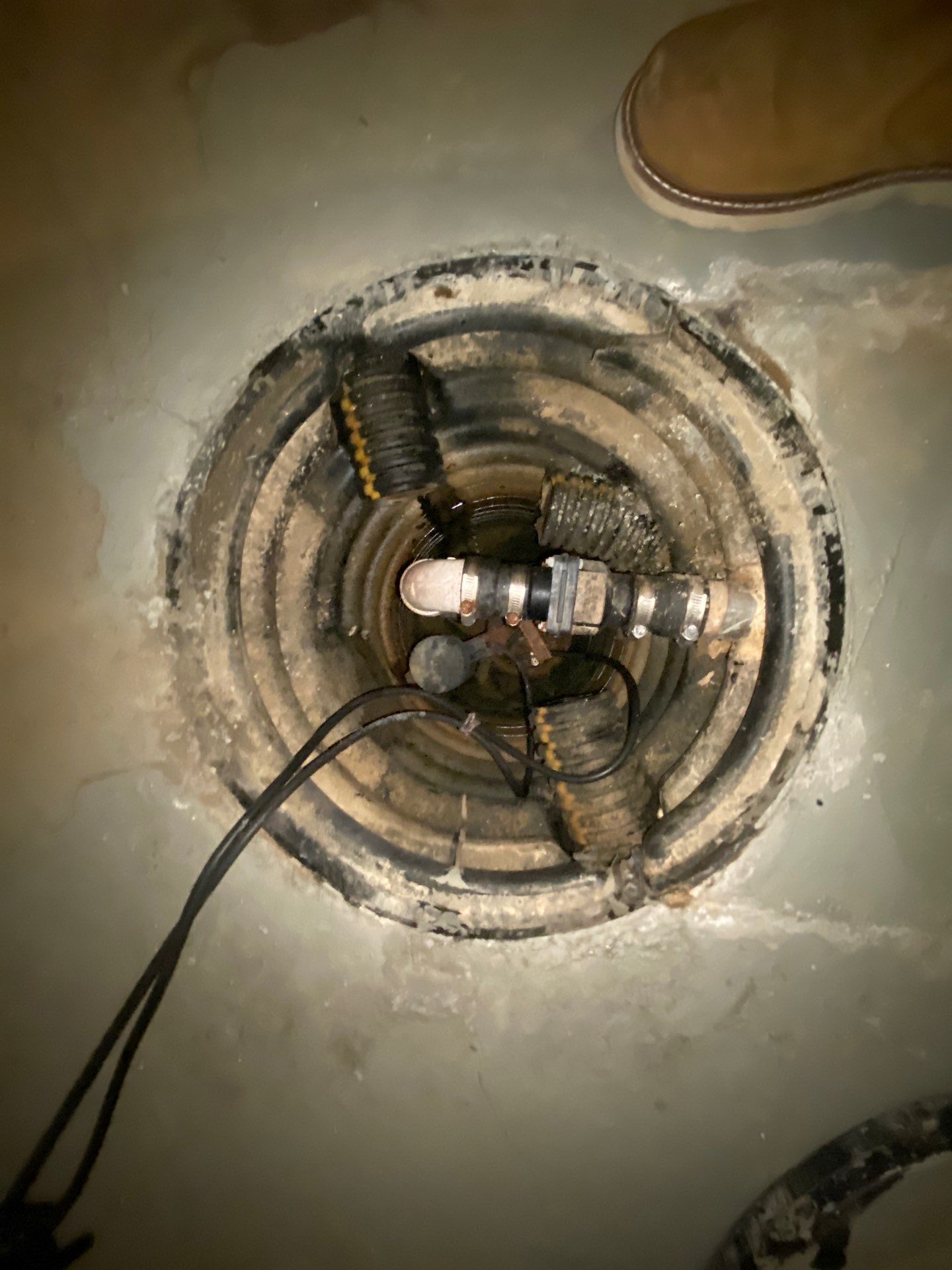
Basement Flooding diagnosed by Epp Foundation Repair
Catch It Early

Six Signals That A Basement Flood Will Repeat Without Intervention
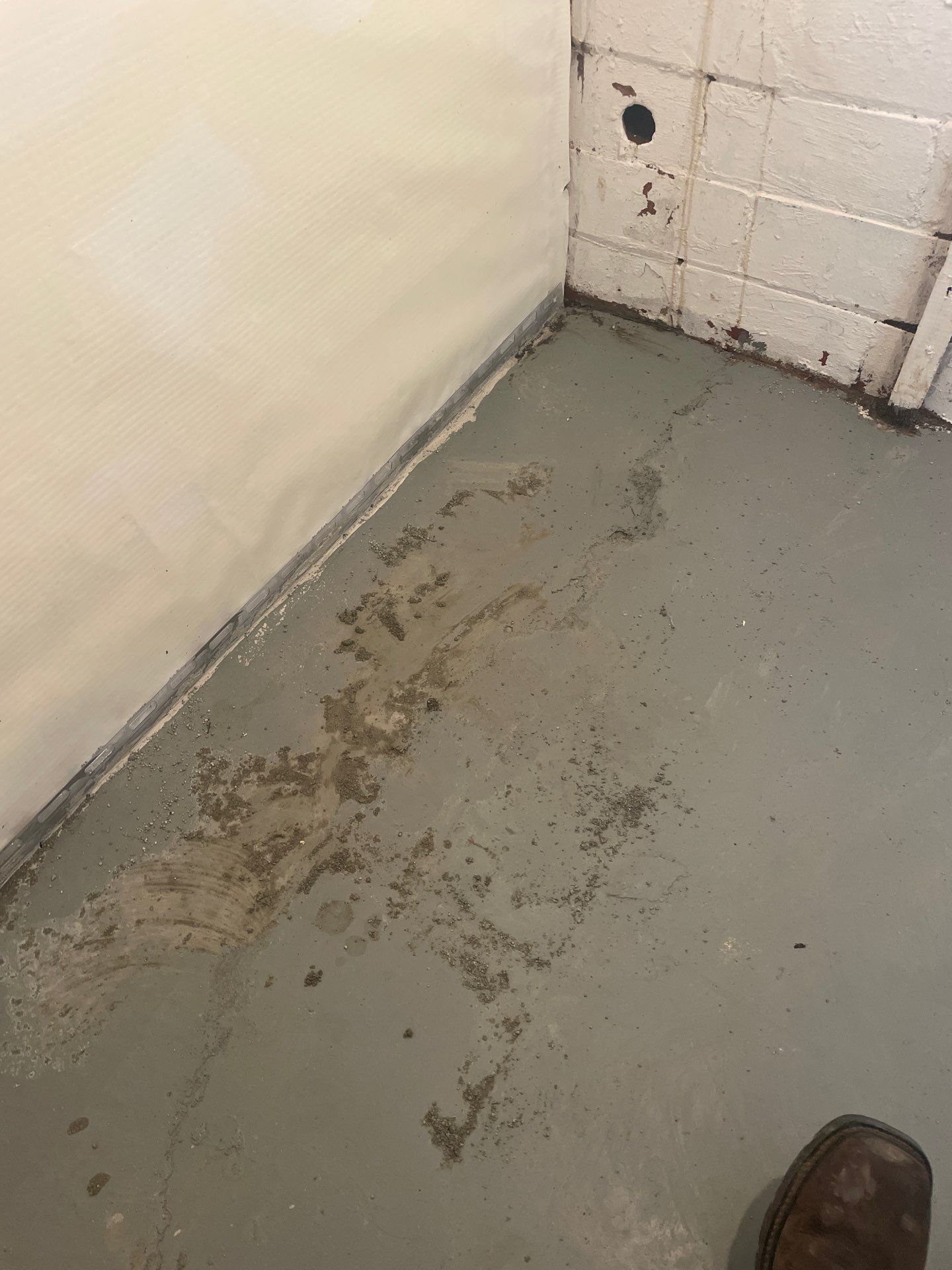
Early warning signs of basement flooding on a Midwest home
01

Water enters at the wall-floor cove joint after every heavy rain

Epp Foundation Repair treats recurring cove joint seepage as a near-certain indicator of hydrostatic pressure exceeding the existing drainage capacity. The fix is interior drain tile feeding a sump basin, not surface sealants. Surface coatings fail within 2 to 4 years under hydrostatic load.

02

The sump pump runs continuously during and after storms

Epp Foundation Repair tests sump pump runtime on every inspection. A pump cycling more than 4 to 6 times per hour during a storm is either undersized for the basin inflow or facing an inflow rate higher than its 1/3 or 1/2 horsepower rating can sustain.

03

Water staining or efflorescence on the wall above the floor line

Epp Foundation Repair logs efflorescence height as a record of past flood levels. White mineral deposits 6 to 18 inches above the floor indicate water has stood at that depth in the past. A flooding pattern, not a one-time event.

04

Musty odor in the basement that persists after carpet drying

Epp Foundation Repair flags persistent musty odor as evidence of ongoing moisture intrusion the homeowner may not be seeing. The odor source is typically active water passage through the slab edge or wall, not the visible flood that triggered the call.

05

Active diagonal cracks in the basement wall with water trace

Epp Foundation Repair installs an Avongard crack monitor on any cracked wall section that shows a water trace. Movement of more than 1/32 inch over 30 to 90 days confirms active wall stress and changes the repair scope from crack injection to structural reinforcement plus waterproofing.

06

Standing water that returns 24 to 72 hours after pumping it out

Epp Foundation Repair treats return-water within 72 hours as a definitive indicator of either a high water table sitting above the footing or a buried drainage line that is no longer functioning. Neither resolves on its own. Both require active intervention to stop.

Most Common Causes

What causes basement flooding in Midwest homes.
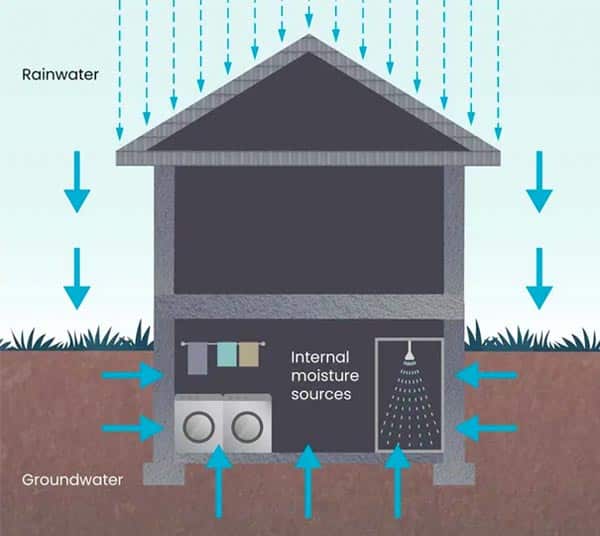
Hydrostatic pressure from a high water table (NE, IA spring)
Epp Foundation Repair measures static water table depths shallower than 4 feet on roughly 1 in 3 properties across Sarpy, Lancaster, Douglas, and Pottawattamie counties during March through May snowmelt and the spring storm cycle. Loess-rich and glacial-till soils across eastern Nebraska and western Iowa hold water like a sponge. 15 percent volumetric saturation is common after a 2-inch rain.
Sump pump failure or undersized capacity
Epp Foundation Repair finds sump pump failure as a direct contributor in roughly 6 out of 10 flooding calls. The three failure modes are mechanical (impeller wear after 7 to 10 years), electrical (power outage during the storm that caused the flood), and capacity (a 1/3 horsepower pump trying to clear a saturated 2,000 square foot footprint). Dave Epp's standard recommendation across Nebraska and Iowa is a 1/2 horsepower primary pump with a battery backup secondary.
Gutter overflow and downspout dump at the foundation
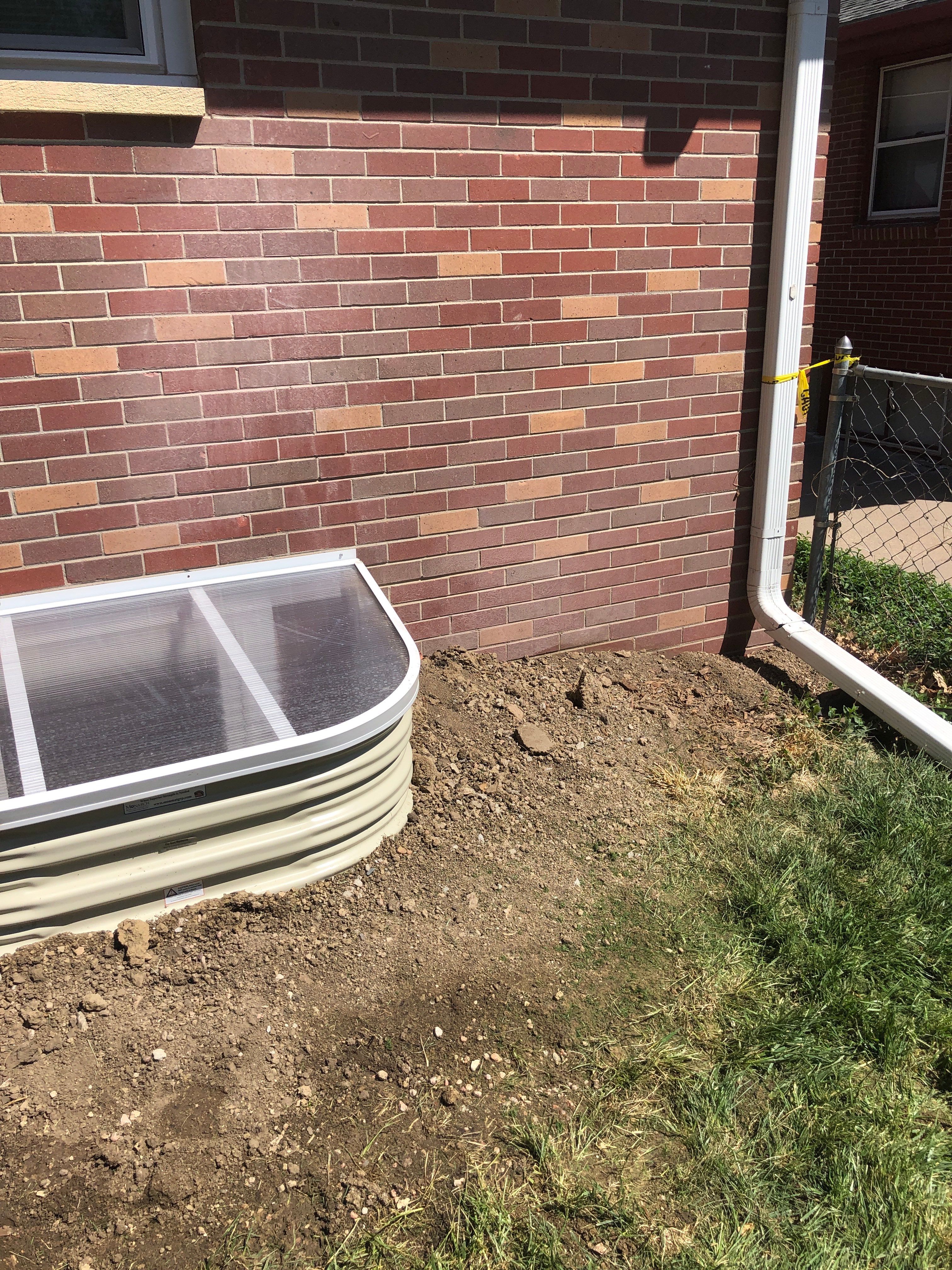
Epp Foundation Repair documents downspouts terminating within 4 feet of the foundation on roughly half of all flooding inspections. A 1,000 square foot roof in a 1-inch rain sheds 620 gallons of water, and a downspout dumping that volume next to the basement wall puts the full load on the foundation drainage system. Epp does not install or extend gutters and downspouts. That scope belongs to a gutter contractor.
Foundation wall cracks leaking under hydrostatic head
Epp Foundation Repair seals leaking foundation wall cracks with sequential epoxy and polyurethane injection. Epoxy bonds the structural concrete back to its original strength at 4,000 to 6,000 psi compressive; polyurethane behind it expands 8 to 10 times its volume to fill the irregular void back to the soil and stop water passage. Hairline cracks under 1/16 inch wide are typically not structural, but every one of them leaks once the water table reaches the crack.
Exterior grading sloping toward the foundation
Epp Foundation Repair finds reverse slope. Soil settling and tipping toward the foundation rather than away. On a substantial fraction of older homes across Lincoln, Omaha, and Council Bluffs. The original 6-inches-of-drop-over-10-feet grade has flattened or reversed over 30 to 60 years of soil settlement and landscaping changes. Epp does not perform yard re-grading; that scope belongs to a landscaper or excavator.
Underlying cause of basement flooding in Midwest homes
Before / After

How basement flooding looks after a permanent fix.

A real Epp Foundation Repair project. The visible symptom resolves once the underlying cause is corrected.
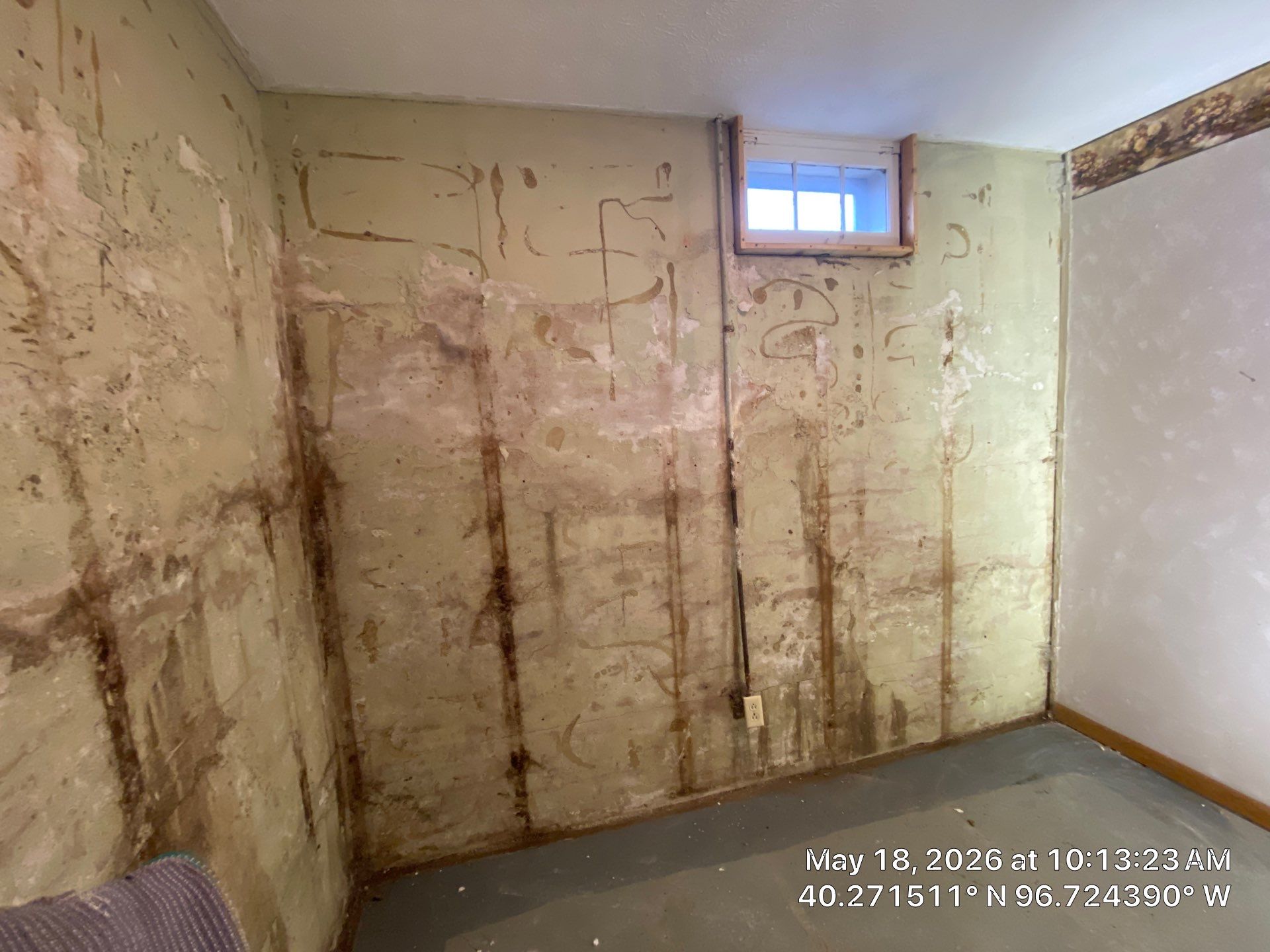
Epp Foundation Repair inspecting extensive water damage and peeling paint on a basement wall in Beatrice, NE
Permanent Solutions

How basement waterproofing specialists actually fix basement flooding.

Solving basement flooding means addressing the underlying soil, pressure, or settlement cause. Not just patching the visible damage. Below are the engineered solutions we install most often for this symptom in Nebraska, Iowa, Kansas, and Missouri homes.

Basement Waterproofing solutions
Regional Context

Why basement water in Nebraska and Iowa needs a regional fix

Saturated clay backfill, 60+ freeze-thaw cycles per winter, and 35 to 40 inches of annual precipitation drive hydrostatic pressure against basement walls in ways that drier or warmer regions never see. Generic waterproofing approaches fail here because they ignore the soil and climate that put water against the wall in the first place.

36 to 42"
Frost penetration depth
Eastern Nebraska average
60 to 80
Freeze-thaw cycles / year
Lincoln to Omaha corridor
35 to 40"
Annual precipitation
NE / IA service region
30+
Years of regional inspections
30,000+ homes assessed

Loess soils and the crack patterns they produce

Most of eastern Nebraska and western Iowa sits on wind-deposited loess. a fine, silty soil 10 to 200+ feet deep. Loess holds its structure when dry but loses cohesion rapidly when saturated. After a wet spring, saturated loess expands against foundation walls. After a dry Nebraska summer, it contracts. pulling away from footings, creating voids beneath slabs, and producing the vertical and diagonal settlement cracks we see most frequently on the Lincoln, Omaha, Council Bluffs corridor.

The Marshall and Sharpsburg loess series. dominant across the eastern Nebraska service area. are particularly prone to this cyclical volume change. Homes built in the 1960s, 1980s on uncompacted loess backfill show the highest incidence of progressive settlement cracking in our inspection data.

Frost depth, freeze-thaw cycles, and horizontal cracking

Eastern Nebraska's 36, 42" frost penetration depth means the soil below grade freezes and thaws 60, 80 times per year. Each cycle applies lateral pressure to basement walls. A wall that holds through ten cycles can fail in the eleventh if drainage has worsened, backfill has settled, or the wall was already at capacity. Horizontal cracks near the soil grade line are almost always a freeze-thaw story in this region.

In eastern Kansas, expansive clay pockets near the surface introduce a different failure mode . consistent volume change regardless of frost depth. Horizontal cracking in Kansas foundations typically traces to clay expansion; the same pattern in Nebraska more often indicates frost-driven hydrostatic pressure.

"If the basement floods more than once, the foundation system has already told you it can't handle the load. Mopping the floor a second time isn't a plan. Find the source, fix the source, and the flooding stops."

Dave Epp
Dave Epp
President, Epp Foundation Repair
Why Choose Epp

Care and expertise from a team that's been doing this since 1994.

Epp Foundation Repair is locally owned and operated, with crews dedicated exclusively to foundation, basement, and concrete work across the Midwest.

Specialized expertise.

Foundation repair, waterproofing, and concrete leveling are our entire focus. not a sideline.

Locally owned since 1994.

Three decades of experience with Midwest soils, basements, and weather conditions.

BBB Integrity Award winner.

Recognized in 2011 and 2016 for ethical business practices and customer transparency.

Warrantied solutions.

Most product solutions carry 10 to 25-year warranties backed by the original installer.

EPP · SINCE 1994

Why hire Epp Foundation Repair.

MEET THE TEAM · 2 MIN
Frequently Asked Questions

Answers to common questions about Basement Flooding.

Don't see your question here? Our team is happy to help. Reach out anytime.

Epp Foundation Repair classifies recurring basement flooding as structural the moment water has entered more than once. A one-time flood from a single equipment failure (a burst pipe, a one-time sump pump dead-battery event) is moderate and may not need foundation work. A flooding event that repeats with each heavy rain or each spring snowmelt is structural. It means the foundation drainage system is no longer keeping up with the hydrostatic load, and untreated it will continue to damage the slab edge, the wall-floor joint, and eventually the interior finishes. Dave Epp says so directly on the inspection rather than waiting for a third or fourth event.

Pricing ranges above are general estimates only and are not project quotes. A precise figure is provided on each written estimate after on-site inspection.
Related Problem Signs

Other basement waterproofing warning signs to watch for.

If you see one, it's worth checking for the others. Most foundation problems show up as more than one symptom.
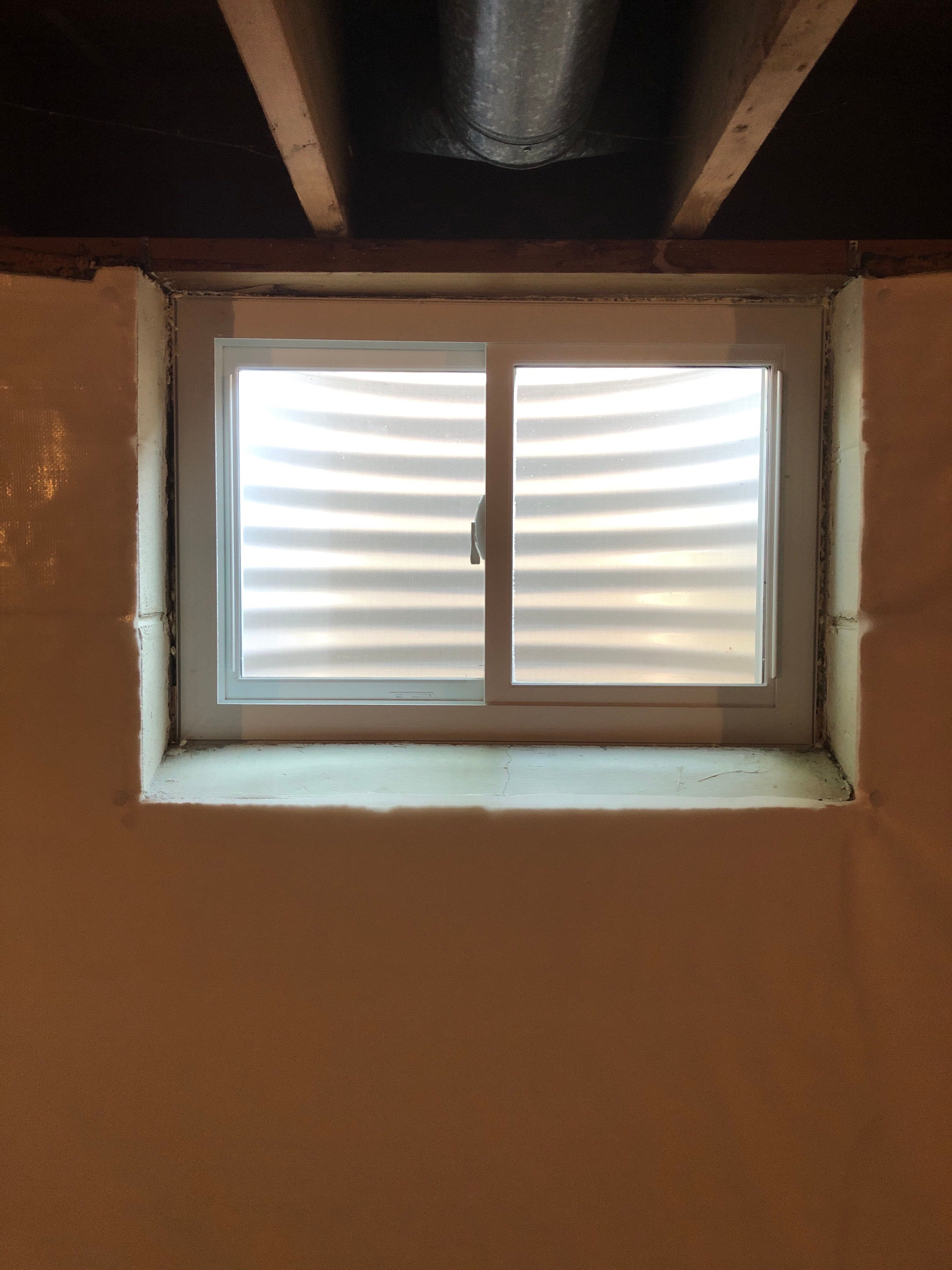
Condensation On Windows
01

Condensation On Windows

Epp Foundation Repair gets called on window condensation roughly 300 times a year across the four-state territory, and Dave Epp's diagnostic rule on the truck is simple: measure the basement relative humidity first, the windows second. Indoor air at 70 degrees and 35 percent relative humidity has a dew point near 40 degrees, and any window glass colder than 40 degrees during a Nebraska or Iowa winter cold snap will form condensation regardless of what is happening in the basement. That kind of condensation is cosmetic. But on roughly 2 out of 5 inspections Epp finds basement relative humidity above 60 percent. High enough that moisture is rising through the house and the upper-floor windows are the visible end of a basement waterproofing problem. The diagnostic costs nothing and tells the homeowner which trade they actually need.

Learn More
Efflorescence
02

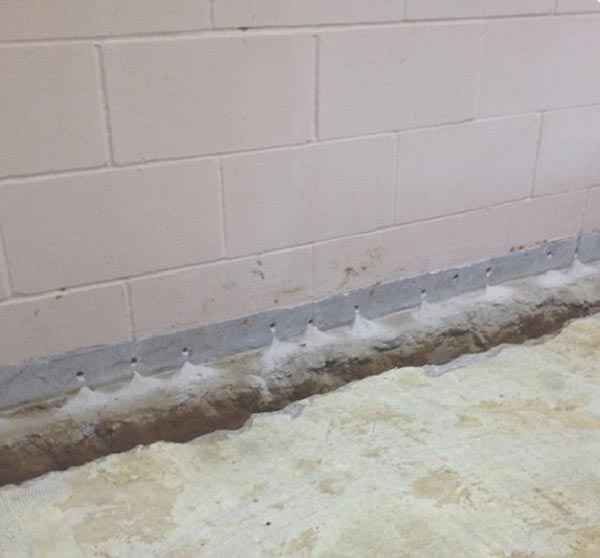
Efflorescence

Epp Foundation Repair walks into a basement and looks at efflorescence the way a doctor looks at a rash. The stain itself is harmless, but it is telling you where the disease is. Efflorescence forms when water moving through concrete or masonry dissolves calcium hydroxide and other minerals, then deposits them as a white chalky film when the water evaporates at the wall surface. The mineral deposit is cosmetic and washes off with a mild acid solution. The water passage that left it behind is structural, and across the four-state territory it almost always traces back to one of three sources: hydrostatic load from saturated loess or clay backfill, surface water dumping from a downspout or reverse grade, or interior humidity condensing on a cold wall face. Dave Epp's first question on any efflorescence inspection is which season the stain appeared in, because the season tells him which water mechanism to look for.

Learn More
Mold Growth
03

Mold Growth

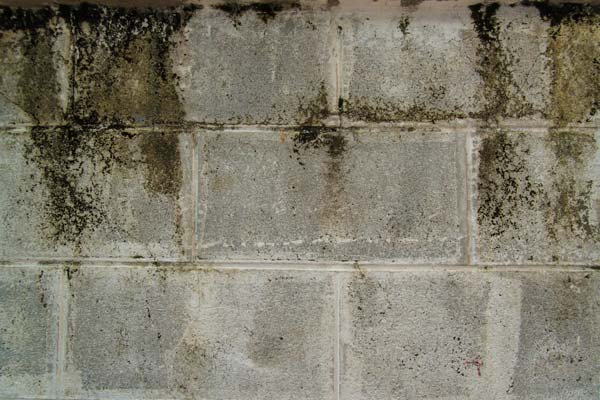
Epp Foundation Repair handles mold calls roughly 200 times a year across the four-state territory, and Dave Epp's first conversation with every homeowner clarifies the scope boundary: Epp does the water source, a certified mold remediation contractor does the mold removal. Mold germinates on any organic surface in basements held above 60 percent relative humidity for 24 to 48 hours, and across eastern Nebraska and western Iowa the natural pattern of loess and glacial-till soils delivering hydrostatic load against basement walls keeps a substantial fraction of unsealed basements above that threshold for weeks at a stretch during spring and early summer. Removing the visible mold without stopping the moisture source is a 6-month delay, not a fix. The mold returns to the same wall, behind the same vapor barrier, on the same drywall. Epp stops the water first, verifies the wall stays dry for 30 to 60 days, then steps aside for the remediator. Sequence matters; it is the difference between a $5,000 dry basement and a $15,000 problem that comes back.

Learn More
Peeling Paint And Hairline Cracks
04

Peeling Paint And Hairline Cracks

Epp Foundation Repair treats peeling basement paint as a diagnostic signal, not a finish problem. When paint blisters, flakes, or releases in sheets on a below-grade wall, the cause is almost always water moving through the concrete or CMU from the outside, hitting the back of the paint film, and breaking the bond between paint and substrate. The paint itself did not fail. It was pushed off. Across the four-state territory, the underlying water source is one of four mechanisms: hydrostatic load from saturated loess and clay backfill, a hairline crack delivering water behind an otherwise intact paint film, a wall that was painted directly over unsealed masonry decades ago, or surface water from a downspout saturating the wall from above. Dave Epp's first move on every peeling-paint inspection is to scrape a test patch and feel the wall behind it. If the concrete is cool and damp, the cause is water, and repainting without addressing the source guarantees the new coat will peel within 12 to 24 months.

Learn More
Water At The Cove Joint
05

Water At The Cove Joint

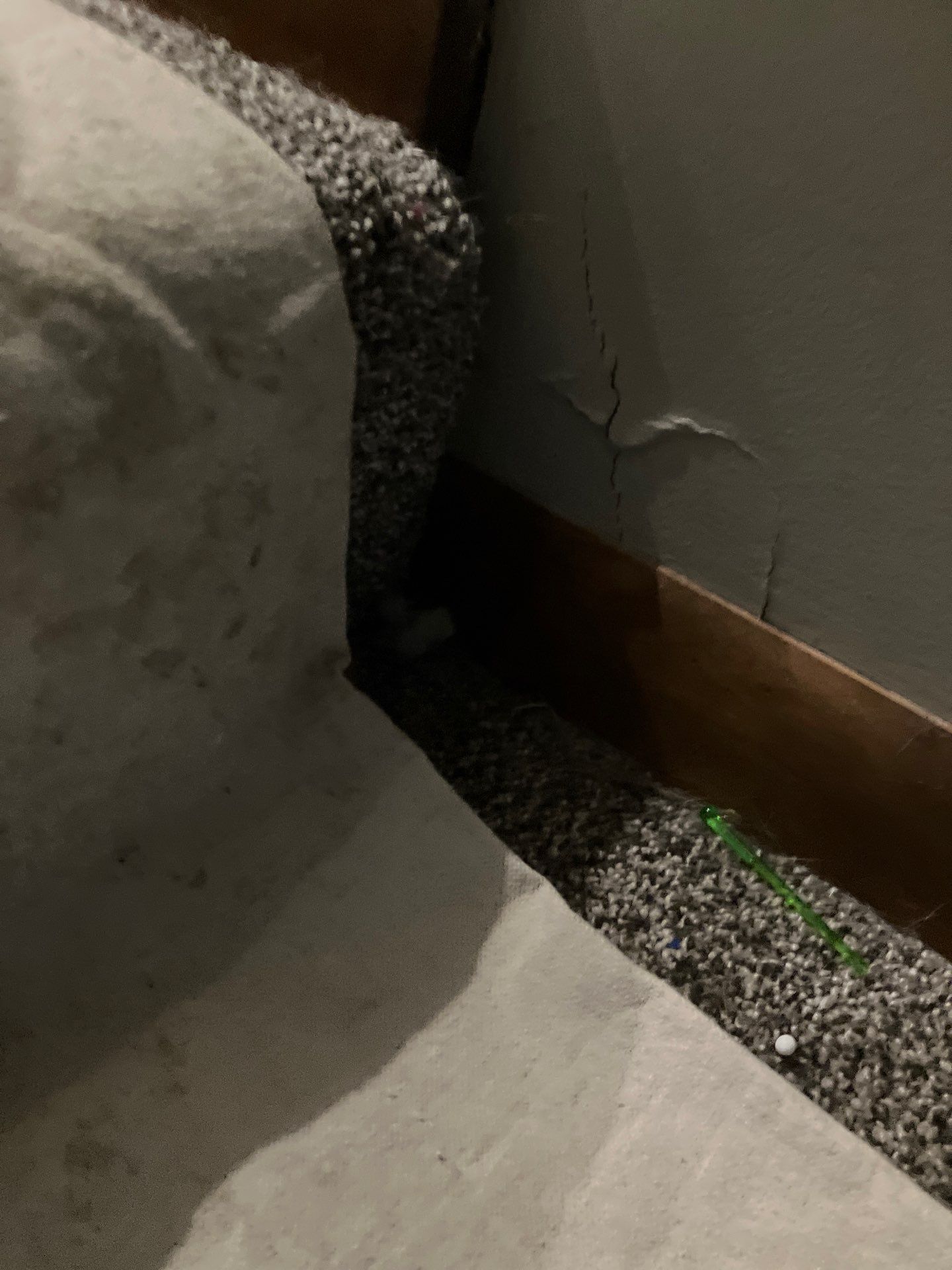
Epp Foundation Repair sees water at the cove joint. The right-angle seam where the basement slab meets the foundation wall. As the single most common point of basement water intrusion across the four-state territory. The mechanism is hydrostatic: groundwater under the slab builds pressure during a wet spring, finds the weakest seal in the basement envelope, and pushes up through the cove. The water emerges as a wet line, a damp ring, or in severe events a small stream running along the floor at the wall base. Across eastern Nebraska and western Iowa, the pattern is concentrated in homes built between 1955 and 1985. An era when the standard practice was to pour the slab against the wall without installing perimeter drain tile, leaving the cove as the only relief point for any subslab water that accumulates. Dave Epp's first question on a cove-leak inspection is which weeks of the year the water shows. The answer almost always lines up with March through May snowmelt and storm activity, confirming the hydrostatic mechanism before any work is scoped.

Learn More
Wet Basement Walls
06

Wet Basement Walls

Epp Foundation Repair treats a wet basement wall as a diagnostic question before a repair quote. Damp, wet, or water-stained walls can have two completely different causes. Water passing through from the outside (intrusion) or water condensing on the cool wall face from humid interior air (condensation), and the fix for one is wrong for the other. Across the four-state territory the diagnostic split runs roughly 70 percent intrusion and 30 percent condensation, with seasonal mix: spring leaks are almost always intrusion driven by hydrostatic load from saturated loess and clay backfill, while late-summer dampness in finished basements is often condensation from a humid air mass meeting a 55 to 60 degree wall. Dave Epp's first move on every wet-wall inspection is to run a pin-type moisture meter at multiple heights and locations on the wall, repeat the reading two to four weeks later if the cause is ambiguous, and only then scope a repair. Selling waterproofing to a homeowner whose problem is actually condensation is the kind of work that costs Epp the BBB Integrity Award. So Epp does not do it.

Learn More
Service Areas

Serving Nebraska, Iowa, Kansas & Missouri.

Local crews based in six regional offices, dispatched daily across four states. If your town isn't listed, call us. we likely serve your area.

Top cities we serve
Check Your Service Area
Our Process

Take the first step toward a healthy home.

A straightforward path from initial inspection to completed repairs.

Step 01

Schedule your inspection.

A local specialist visits your home, evaluates the foundation, and answers your questions on site. No cost, no obligation.

Step 02

Receive an estimate based on your needs.

We provide a clear, written estimate with a scope of work tailored to your home's specific issues. Typically within one business day.

Step 03

Get your repairs.

Our certified crews complete the work on schedule and back it with product warranties of up to 25 years.

Customer Reviews

Over 1,750 homeowners have shared their experience.

A 4.9-star average across Google, with verified reviews from homeowners throughout Nebraska, Iowa, Kansas, and Missouri.

Free Estimate

Two ways to start: book instantly, or request an estimate.

Schedule your inspection in seconds with our Driive booking tool, or share a few details and a local specialist will follow up within one business day.

What to expect
  • A local foundation specialist on site
  • A complete walk-through of the findings
  • A written estimate within one business day
  • No cost, no obligation, no high-pressure sales
Prefer to call
402-423-9192
Nebraska · Iowa · Kansas · MissouriSince 1994
Epp Foundation Repair

Let's take the first step toward a healthy home.

A local specialist will inspect your foundation, walk you through the findings, and send a clear estimate. no cost, no pressure.

Book instantly with Driive
BBB Accredited
Fully Insured
"By Your Side" Guarantee
Our Locations

Six regional offices across the Midwest.

See all service areas
Lincoln, NE
Epp Foundation Repair
1133 Libra Dr
Lincoln, NE 68512
402-566-5265
Omaha, NE
Epp Foundation Repair
12305 Gold St, Ste 2
Omaha, NE 68144
402-521-5081
Grand Island, NE
Epp Foundation Repair
802 Bronze Rd
Grand Island, NE 68803
308-303-3944
Norfolk, NE
Epp Foundation Repair
1105 S 13th St, Ste 205
Norfolk, NE 68701
402-792-4092
Clive, IA
Epp Foundation Repair
2175 NW 86th St #14c
Clive, IA 50325
515-349-5562
St. Joseph, MO
Epp Foundation Repair
2400 Frederick Ave, Suite 315
St. Joseph, MO 64506
816-549-2672